Motherboard
The MasterServer features a FUJITSU SIEMENS D2509 motherboard

Features
- 6x4GB FB-DDR2 ECC RAM
- Dual LGA771 Socket For Xeon 5100-5400 Series
- IRMC
- MegaRaid Integrated Controller
- Gigabit Ethernet Broadcom 5708C
- Service LAN Ethernet
- SSI EEB Baseboard 12x13 Inches (E-ATX)
Architecture
Scheme
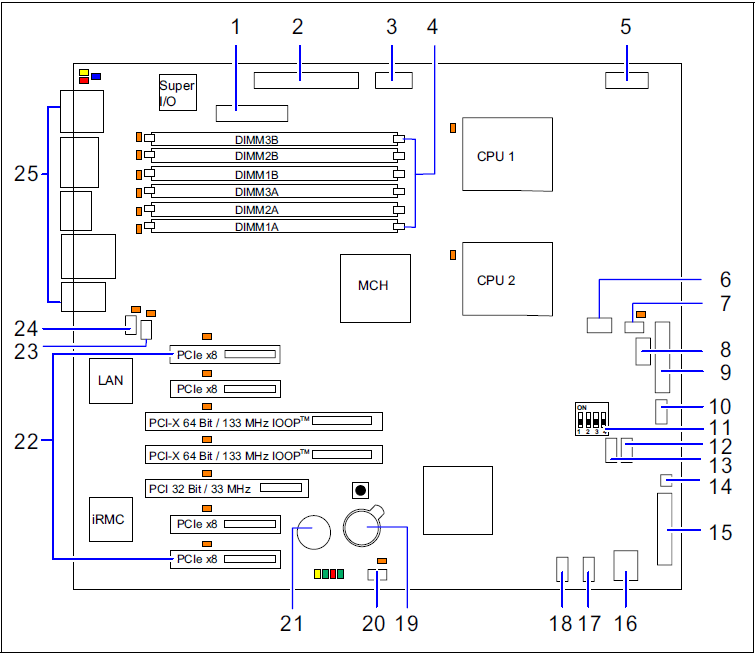
Legend:
|
|
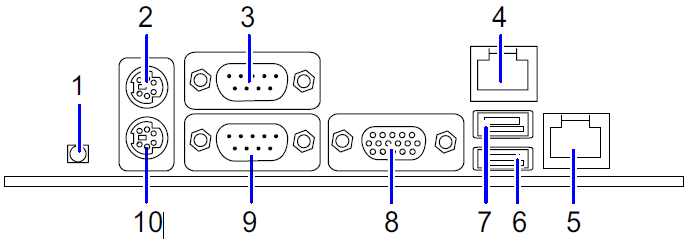
Ports
RAM Slots

PCI Slots
| PCI slot Type | Type Mechanical | Function |
|---|---|---|
| 1 | PCIe x8 | PCIe x4 or PCIe x8 slot (optional) |
| 2 | PCIe x4 | PCIe x8 PCIe x4 slot or not available if slot 1 x8 (optional) |
| 3 | PCI 32 | 32-bit PCI slot |
| 4 | PCI-X 64 | 64-bit PCI-X slot 133 MHz if only one card has been populated in slot 4 or 5 100 MHz for population with 2 cards |
| 5 | PCI-X 64 | |
| 6 | PCIe x8 | PCIe x4 or PCIe x8 slot (optional) |
| 7 | PCIe x8 | PCIe x4 slot or not available if slot 6 x8 (optional) |
Note
The PCIe slots are v1.1 x4 1GB/s and x8 2GB/s rated throughput.
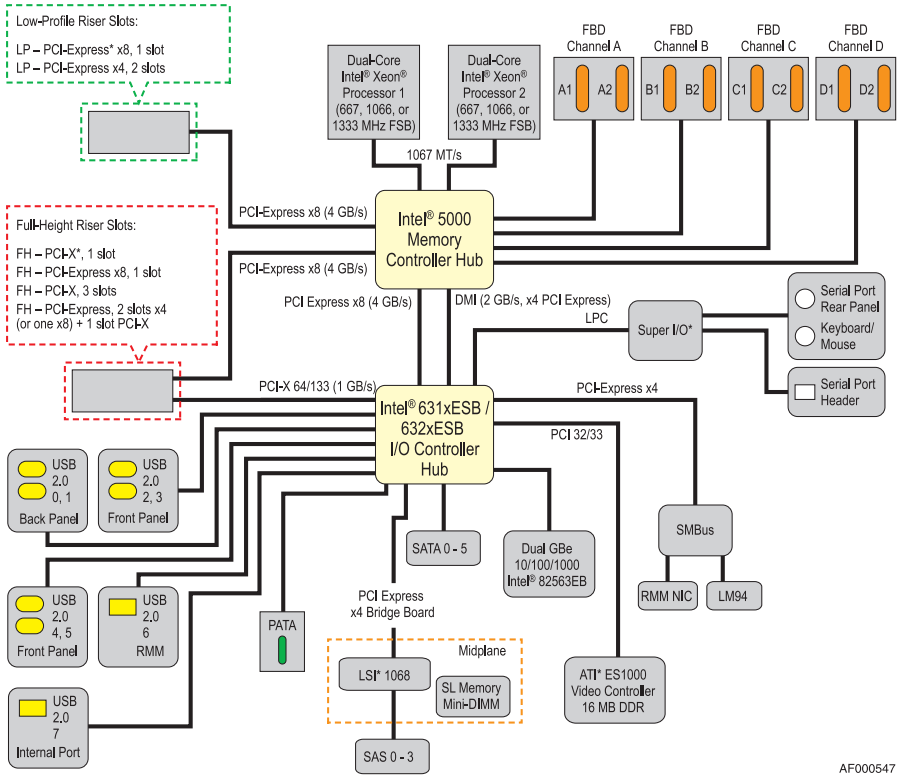
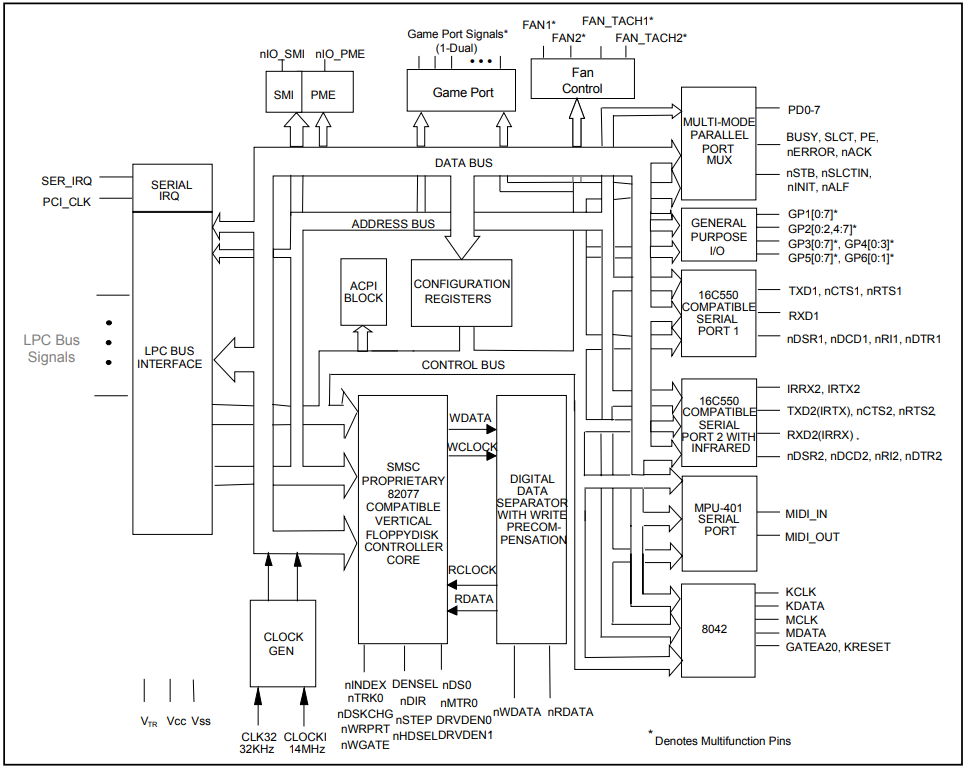
Super I/O
The motherboard features a LPC47M10x Super I/O controller chip which manages all the I/O [3] ports through the LPC bus
VRM
The motherboard features a double EVRD 11.0 (VRM [4]).
The common term nowadays is VRM but when this motherboard first came out, Intel designated its voltage regulator circuit as an Enterprise Voltage Regulator-Down.
The only difference is that the EVRD is compliant to all the CPUs power specifications by Intel that are compatible with the motherboard, which means its more enterprise and high-end suitable
Gigabyte called it DPS and it was an add-in pluggable module that provided some Pentium 4 CPUs with 4 extra power phases to reach higher overclock.
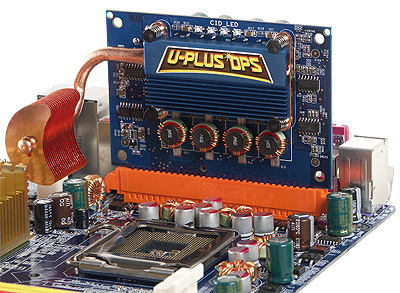
Having a look at the VRM, it can be said its design is a 4+1 power phases without doublers. Each CPU has its own VRM module and also PWM [5] chip
Most high-end motherboards come with passive or active cooled heatspreeders for the VRM MOSFETs since they get pretty hot and are responsible of providing and filtering the power to the CPU.
Some of them are even water cooled
Footnotes
| [1] | Memory Controller Hub |
| [2] | South Bridge |
| [3] | Input/Output |
| [4] | Voltage Regulator Module |
| [5] | Pulse With Modulation |